FlemingClans.com

"Scotland's Fleming Clan: a Genealogical History" - coming in 2027!
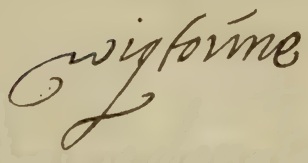 20th chief - John Fleming, 4th Earl of Wigtown and 9th Lord Fleming
(c1633 - 1668)
Basic information about this person: \click here\
John, 4th Earl of Wigtown, held the earldom for only three years. He served as a Privy Councillor and Justice of the Peace in the early years of the Restoration, and his early death passed the title to his younger brother.
Lord Fleming
John was born around 1633, the eldest son of John Fleming, 3rd Earl of Wigtown, and Lady Jean Drummond. He studied at Glasgow and graduated in 1657, during the Cromwellian occupation.
After the Restoration, as Lord Fleming, he was named in 1661 as a commissioner for Lanarkshire and Dunbartonshire to raise the annual grant of £40,000 sterling voted to King Charles II. In May 1662, under the terms of his marriage contract, he received a charter of all the lands of the earldom of Wigtown. He was made a burgess and guild brother of Dumbarton in October 1662.
Privy Councillor
From 1663 John sat in the Privy Council, often alongside his brother William, and in October 1663 Parliament appointed him a Justice of the Peace for Lanarkshire and Stirlingshire. In January 1664 the Council ordered him, on the king’s behalf, to sign the declaration renouncing the Covenant in front of the Earl of Linlithgow. This was a requirement for holding public office in Restoration Scotland, and his grandfather had once been one of the Covenant’s leading signatories.
Earl of Wigtown
John succeeded his father as 4th Earl in February 1665 and first sat in Parliament as an earl in August of that year. He sold the barony of Thankerton to Sir William Purves of Woodhouselee in 1667 and settled a dispute with Stirling of Herbertshire over the mosses and muirs of that barony. In 1667 and 1668 he served as a commissioner for Lanarkshire and Dunbartonshire for raising taxes for the king and as a commissioner of excise.
Family and legacy
John married Ann Ker, second daughter of Harry, Lord Ker, and granddaughter of the 1st Earl of Roxburghe. Their only child was a daughter, Jean, who became Countess of Panmure. John died between April and August 1668, and with no son to succeed him the earldom passed to his younger brother William. His nickname, “the Prosaic”, suggests a dutiful rather than eventful life.